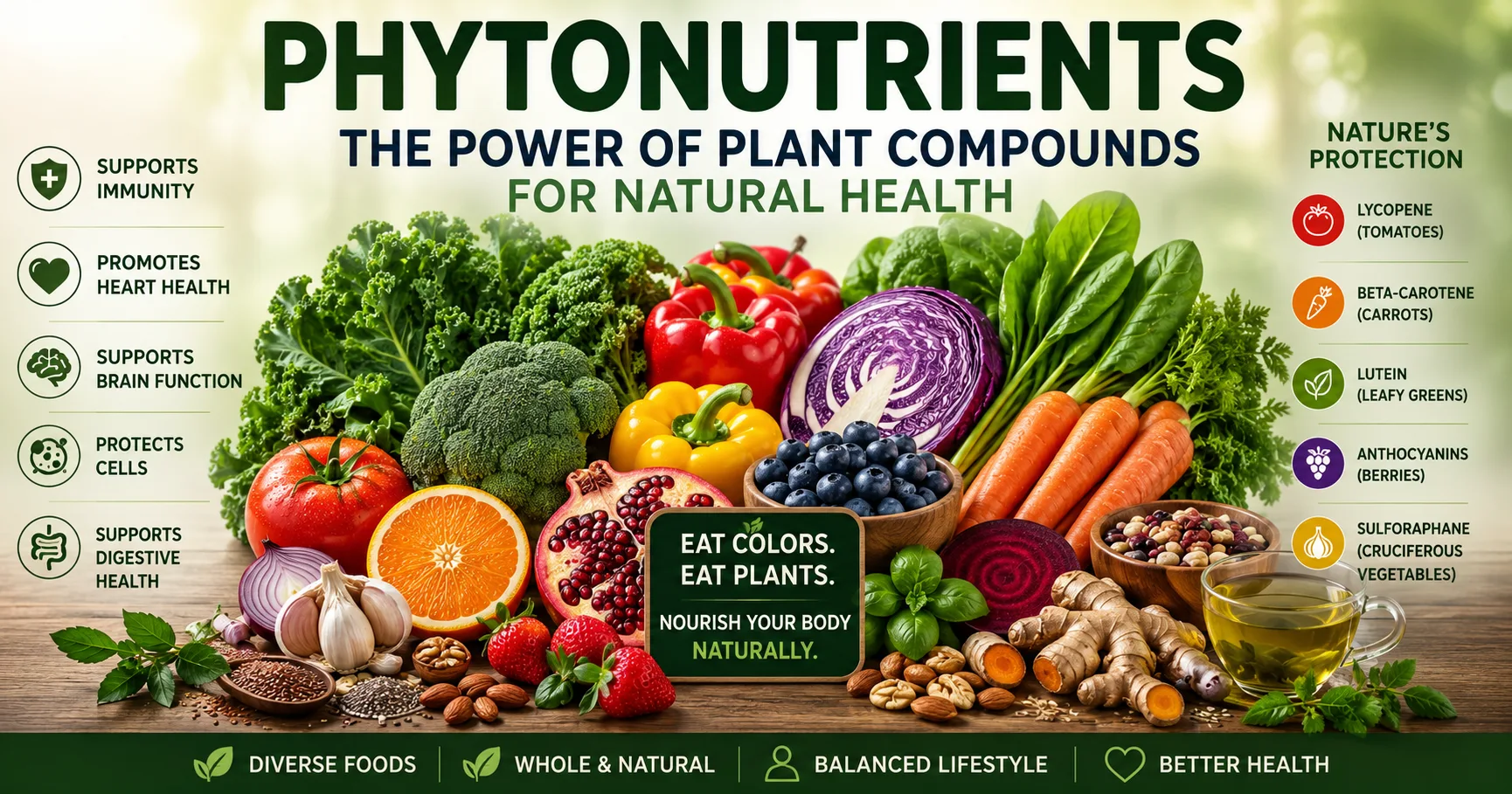
The Complete Guide to Phytonutrients: How Plant Compounds Support Natural Health
When people think about healthy eating, vitamins, minerals, protein, and fiber are often the first nutrients that come to mind. While these nutrients are undeniably essential, scientists have identified thousands of naturally occurring compounds in fruits, vegetables, legumes, herbs, spices, nuts, and whole grains that also contribute to overall health. These compounds are known as phytonutrients, or phytochemicals.
Unlike vitamins and minerals, phytonutrients are not considered essential nutrients because humans can survive without them. However, decades of nutritional research suggest they may play an important role in supporting normal cellular function, protecting plants from environmental stress, and contributing to a balanced diet associated with long-term health.
Colorful fruits and vegetables owe much of their appearance to these remarkable compounds. The deep red of tomatoes, the bright orange of carrots, the rich purple of blueberries, and the vibrant green of spinach all reflect unique phytonutrients with different biological properties.
Instead of acting like medicines or "detox agents," phytonutrients work alongside vitamins, minerals, dietary fiber, and healthy lifestyle habits to support the body's normal physiological processes. This is one reason why nutrition experts consistently recommend eating a wide variety of plant-based foods rather than relying on supplements alone.
In this comprehensive guide, you'll learn what phytonutrients are, why plants produce them, the major families of phytonutrients, how they contribute to overall health, and practical strategies for including more colorful foods in your everyday meals.
What Are Phytonutrients?
The word phytonutrient comes from the Greek word phyto, meaning "plant." Phytonutrients are natural compounds produced by plants that help them survive in changing environments. They protect plants against ultraviolet radiation, insects, bacteria, fungi, drought, and other environmental challenges.
Scientists have identified more than 25,000 different phytonutrients, and research continues to discover new compounds every year. Unlike carbohydrates, proteins, fats, vitamins, and minerals, phytonutrients are incredibly diverse in both structure and function.
When humans eat colorful plant foods, these compounds become part of a balanced dietary pattern associated with numerous health benefits. Researchers continue studying exactly how different phytonutrients interact within the body, but evidence consistently supports diets rich in fruits, vegetables, legumes, herbs, whole grains, and nuts.
Why Do Plants Produce Phytonutrients?
Plants cannot run away from predators or move to safer environments. Instead, they produce protective chemicals that help them survive. Many phytonutrients act as the plant's natural defense system.
Some pigments protect leaves from excessive sunlight. Others discourage insects from eating the plant, while certain compounds help fight bacteria or fungal infections. These same compounds are responsible for many of the colors, aromas, and flavors we associate with fresh produce.
For example:
- Lycopene gives tomatoes and watermelon their rich red color.
- Beta-carotene creates the orange color of carrots and sweet potatoes.
- Anthocyanins produce the deep purple and blue colors found in berries.
- Chlorophyll is responsible for the vibrant green color of leafy vegetables.
- Curcumin gives turmeric its distinctive golden-yellow appearance.
The brighter and more varied your plate, the greater the variety of phytonutrients you are likely to consume.
The Main Families of Phytonutrients
Although thousands of phytonutrients exist, scientists generally classify them into several major groups.
Carotenoids
Carotenoids are responsible for many yellow, orange, and red pigments found in fruits and vegetables. More than 600 carotenoids have been identified, although only a few are commonly consumed.
Examples include:
- Beta-carotene
- Alpha-carotene
- Lycopene
- Lutein
- Zeaxanthin
Foods rich in carotenoids include carrots, pumpkins, tomatoes, mangoes, apricots, spinach, kale, and sweet potatoes.
Flavonoids
Flavonoids represent one of the largest groups of phytonutrients. They are found in berries, apples, onions, tea, citrus fruits, cocoa, grapes, and many herbs.
Researchers continue investigating the relationship between flavonoid-rich diets and cardiovascular, cognitive, and metabolic health.
Glucosinolates
These sulfur-containing compounds are found mainly in cruciferous vegetables such as broccoli, cauliflower, Brussels sprouts, cabbage, kale, and bok choy.
When these vegetables are chopped or chewed, glucosinolates are converted into biologically active compounds that researchers continue to study for their potential health-supporting properties.
Polyphenols
Polyphenols include thousands of naturally occurring plant compounds found in fruits, vegetables, coffee, tea, olive oil, nuts, seeds, and whole grains.
Many polyphenols interact with the gut microbiome, making them an excellent complement to a diet that supports digestive health.
Phytoestrogens
Phytoestrogens are naturally occurring compounds found in soybeans, flaxseeds, sesame seeds, chickpeas, and certain legumes. Despite their name, they do not function as human estrogen but have structural similarities that researchers continue studying.
How Phytonutrients Support Overall Health
One of the most exciting areas of nutrition research focuses on how dietary patterns rich in plant foods contribute to overall health. Rather than acting through a single mechanism, phytonutrients appear to interact with multiple biological systems.
Current evidence suggests that diets naturally rich in phytonutrients are associated with:
- Greater dietary diversity.
- Higher intake of dietary fiber.
- Increased consumption of vitamins and minerals.
- Support for normal immune function.
- Healthy digestion.
- Support for normal cellular protection against oxidative stress.
- Better overall diet quality.
It is important to understand that these benefits are linked to eating whole foods as part of an overall healthy dietary pattern—not to consuming isolated phytonutrient supplements.
Phytonutrients vs. Vitamins: What's the Difference?
Although both are naturally present in plant foods, vitamins and phytonutrients serve different roles.
Vitamins are considered essential nutrients because the body requires them for normal growth and function. Deficiencies can lead to specific diseases, such as scurvy from inadequate vitamin C or rickets from severe vitamin D deficiency.
Phytonutrients, on the other hand, are not classified as essential. Humans can survive without consuming specific phytonutrients, yet research suggests that eating a wide variety of phytonutrient-rich foods is associated with better long-term health outcomes.
In other words, vitamins help prevent deficiency diseases, while phytonutrients contribute to the overall nutritional value of plant-based foods.
The Science Behind "Eating the Rainbow"
Nutrition professionals often encourage people to "eat the rainbow." This recommendation goes beyond aesthetics. Different colors in plant foods usually indicate different phytonutrient profiles.
- Red foods like tomatoes and watermelon contain lycopene.
- Orange foods such as carrots and pumpkins are rich in beta-carotene.
- Yellow foods like corn and peppers contain lutein and zeaxanthin.
- Green vegetables provide chlorophyll, folate, lutein, and glucosinolates.
- Blue and purple fruits such as blueberries, blackberries, and grapes contain anthocyanins.
- White vegetables including garlic, onions, and mushrooms provide unique sulfur-containing compounds and other beneficial phytochemicals.
By choosing a variety of colors throughout the week, you naturally increase the diversity of phytonutrients in your diet.
The Best Foods Rich in Phytonutrients
While supplements continue to grow in popularity, experts consistently recommend obtaining phytonutrients from whole foods whenever possible. Whole foods provide a complex combination of fiber, vitamins, minerals, healthy fats, and plant compounds that work together in ways scientists are still discovering.
The healthiest dietary patterns—including the Mediterranean diet and other plant-forward eating styles—naturally provide abundant phytonutrients through a wide variety of colorful ingredients.
In the next section of this guide, we'll explore more than 30 of the richest food sources of phytonutrients, discuss cooking methods that help preserve these valuable compounds, explain common myths about antioxidant supplements, and provide practical meal-planning strategies to increase phytonutrient intake every day.
Top Phytonutrient-Rich Foods to Include in Your Diet
Building a diet rich in phytonutrients does not require expensive "superfoods" or restrictive eating plans. Many everyday foods naturally contain a remarkable variety of beneficial plant compounds. The goal is not to eat one perfect food but to enjoy a wide range of colorful fruits, vegetables, legumes, nuts, seeds, herbs, spices, and whole grains. Dietary diversity provides your body with a broader spectrum of phytonutrients while also increasing fiber, vitamins, minerals, and other valuable nutrients.
1. Blueberries
Blueberries are among the richest dietary sources of anthocyanins, the natural pigments responsible for their deep blue color. They also provide vitamin C, manganese, fiber, and numerous polyphenols that have been widely studied.
2. Tomatoes
Tomatoes are best known for containing lycopene, a carotenoid responsible for their bright red color. Interestingly, cooked tomatoes often provide more absorbable lycopene than raw tomatoes because heat helps release the compound from plant tissues.
3. Broccoli
Broccoli contains glucosinolates, vitamin C, vitamin K, folate, potassium, and dietary fiber. Light steaming preserves many nutrients while maintaining its pleasant texture.
4. Carrots
Carrots provide beta-carotene, one of the best-known carotenoids. They also contain fiber and several antioxidant compounds naturally found in orange vegetables.
5. Spinach
Spinach supplies chlorophyll, lutein, zeaxanthin, folate, magnesium, vitamin K, and dietary fiber. It is equally suitable for salads, soups, omelets, and smoothies.
6. Kale
Kale is exceptionally rich in carotenoids, glucosinolates, vitamins C and K, and numerous plant compounds associated with healthy dietary patterns.
7. Bell Peppers
Red, yellow, and orange peppers contain vitamin C together with several carotenoids that contribute to their vibrant colors.
8. Garlic and Onions
Garlic and onions provide sulfur-containing phytochemicals along with flavonoids that contribute to their characteristic flavor and nutritional value.
9. Citrus Fruits
Oranges, lemons, limes, grapefruits, and mandarins contain flavonoids, vitamin C, and soluble fiber that complement a healthy eating pattern.
10. Green Tea
Green tea naturally contains catechins, a group of polyphenols that have been extensively investigated in nutrition research.
How Cooking Affects Phytonutrients
Preparing vegetables in different ways changes the availability of certain nutrients. While some vitamins are sensitive to heat, several phytonutrients actually become easier for the body to absorb after cooking.
- Steaming preserves many water-soluble vitamins.
- Cooking tomatoes increases lycopene availability.
- Light sautéing with olive oil may improve absorption of fat-soluble carotenoids.
- Overboiling vegetables can reduce some heat-sensitive nutrients.
- Eating both raw and cooked vegetables offers the greatest nutritional variety.
Rather than choosing only raw or only cooked vegetables, aim to include both preparation methods throughout the week.
Can Supplements Replace Whole Foods?
Although many supplements advertise concentrated plant extracts, current scientific evidence generally supports obtaining phytonutrients from whole foods whenever possible. Fruits and vegetables contain thousands of naturally occurring compounds that interact with fiber, vitamins, minerals, and healthy fats in complex ways that isolated supplements cannot fully replicate.
For most healthy adults, supplements should complement—not replace—a balanced dietary pattern rich in plant foods.
Simple Ways to Eat More Phytonutrients Every Day
- Choose at least three different vegetable colors every day.
- Eat fresh fruit instead of sugary desserts whenever possible.
- Add leafy greens to sandwiches, soups, smoothies, and pasta dishes.
- Replace refined grains with whole grains.
- Eat beans or lentils several times each week.
- Snack on mixed nuts instead of highly processed snacks.
- Season meals with herbs and spices.
- Try one new fruit or vegetable each week.
- Fill half of every meal with vegetables.
- Aim to consume around 30 different plant foods over the course of a week.
Sample One-Day Phytonutrient-Rich Meal Plan
Breakfast
Rolled oats topped with blueberries, sliced strawberries, walnuts, flaxseeds, and plain Greek yogurt.
Morning Snack
An apple with a handful of almonds.
Lunch
Grilled salmon served with quinoa, steamed broccoli, spinach salad, cherry tomatoes, cucumbers, and extra virgin olive oil.
Afternoon Snack
Carrot sticks served with hummus.
Dinner
Lentil and vegetable stew with roasted Brussels sprouts and mixed leafy greens.
Evening
A cup of green tea accompanied by a fresh kiwi.
Frequently Asked Questions
What are phytonutrients?
Phytonutrients are naturally occurring compounds produced by plants. They contribute to the color, flavor, aroma, and natural protective systems of fruits, vegetables, legumes, herbs, spices, nuts, and seeds.
Are phytonutrients the same as antioxidants?
No. Some phytonutrients have antioxidant properties, but phytonutrients represent a much broader family of plant compounds with different biological functions.
Should I take phytonutrient supplements?
Most people can obtain abundant phytonutrients by eating a balanced diet rich in colorful whole plant foods. Supplements should only be considered when recommended by a qualified healthcare professional.
What is the easiest way to increase phytonutrient intake?
Eat a wide variety of colorful fruits and vegetables every day, choose whole grains, include legumes regularly, and replace highly processed foods with minimally processed plant foods whenever possible.
Conclusion
Phytonutrients are one of nature's greatest nutritional gifts. Although they are not classified as essential nutrients like vitamins or minerals, they contribute significantly to the health benefits associated with diets rich in fruits, vegetables, legumes, nuts, seeds, herbs, spices, and whole grains.
Current scientific evidence continues to support a simple message: eating a colorful, plant-rich diet is one of the most effective long-term strategies for improving overall diet quality. Instead of searching for miracle supplements or restrictive detox programs, focus on filling your plate with a diverse selection of minimally processed plant foods every day. Small, sustainable dietary choices practiced consistently over time provide far greater benefits than any short-term nutrition trend.
Related Articles
- The Complete Guide to the Gut Microbiome and Natural Detoxification
- The Science of Cellular Detoxification
- Hydration Science: Why Filtered Water Is Your Best Kidney Cleanse Tool
References
- National Institutes of Health (NIH). Office of Dietary Supplements.
- Harvard T.H. Chan School of Public Health. The Nutrition Source.
- World Health Organization (WHO). Healthy Diet Guidelines.
- U.S. Department of Agriculture (USDA). FoodData Central.
- Slavin JL, Lloyd B. Health Benefits of Fruits and Vegetables. Advances in Nutrition.
- Nature Reviews Gastroenterology & Hepatology. Dietary Polyphenols and Human Health.
Ready to Start Your Detox?
Take our free 5-question quiz and get a personalized detox plan built for your body and goals.
Take the Free Quiz →