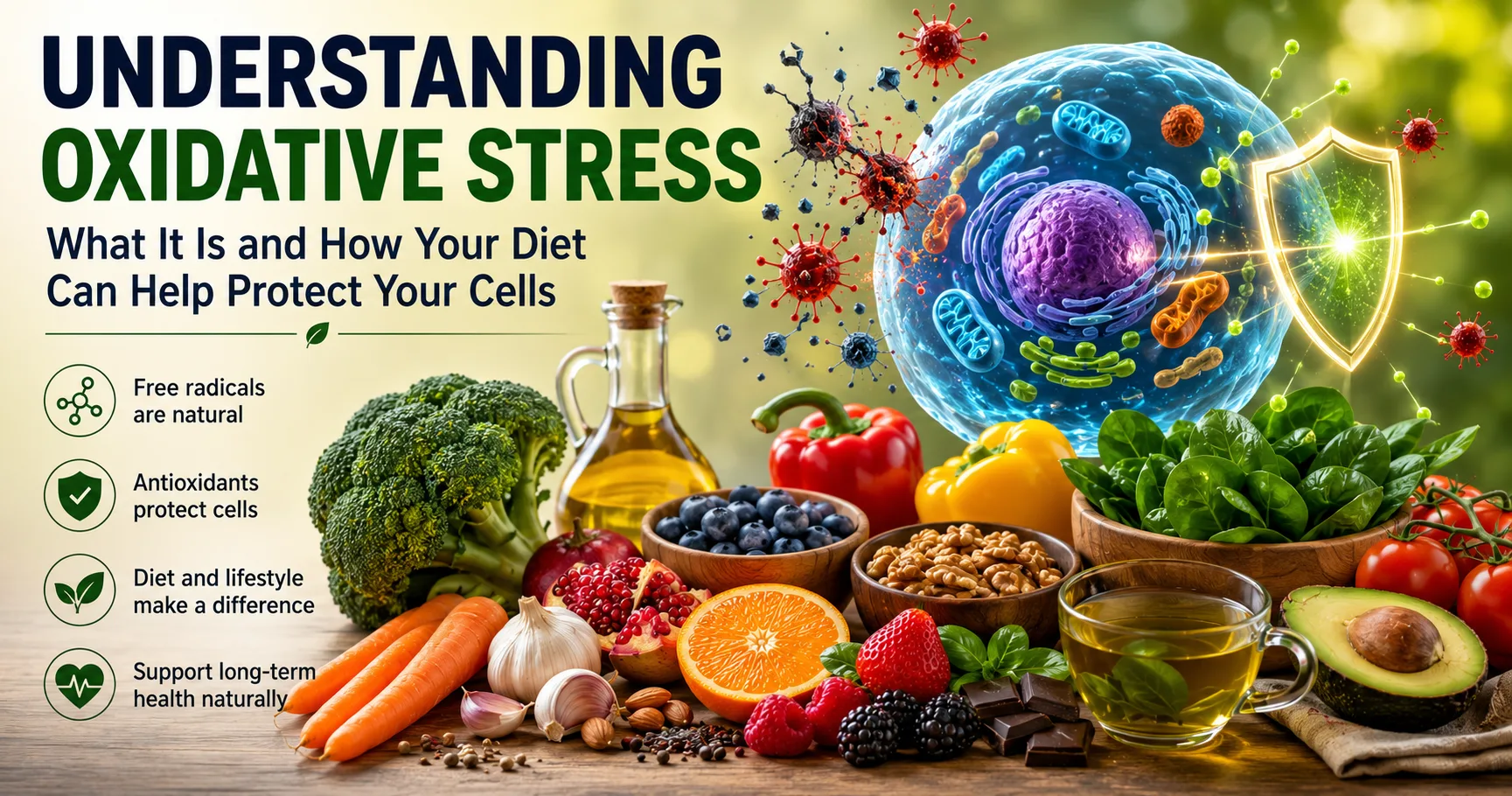
Understanding Oxidative Stress: What It Is and How Your Diet Can Help Protect Your Cells
Every second of every day, your body performs billions of chemical reactions that keep you alive. You breathe, digest food, produce energy, repair tissues, fight infections, and replace damaged cells without consciously thinking about it. While these biological processes are essential for life, they also generate natural byproducts known as free radicals. Under normal circumstances, your body effectively controls these molecules using an intricate defense system. However, when free radical production exceeds the body's protective capacity, a condition called oxidative stress may develop.
Oxidative stress has become one of the most widely studied topics in nutrition and medical research. Scientists have investigated its relationship with aging, cardiovascular health, brain function, metabolic health, immune regulation, and many chronic diseases. Although oxidative stress is a natural part of human biology, long-term imbalance may contribute to cellular damage over time.
Fortunately, the body has evolved remarkable defense mechanisms to maintain balance. These include internally produced antioxidant enzymes as well as nutrients obtained from a healthy diet. Fruits, vegetables, legumes, whole grains, nuts, seeds, herbs, and spices all provide compounds that help support the body's natural antioxidant systems.
Rather than relying on miracle supplements or restrictive diets, current scientific evidence emphasizes the importance of a varied, plant-rich eating pattern combined with healthy lifestyle habits. This article explains oxidative stress in simple language, explores the role of free radicals, and discusses how nutrition and daily habits may help support your body's natural defenses.
What Is Oxidative Stress?
Oxidative stress describes an imbalance between the production of free radicals and the body's ability to neutralize them through antioxidant defenses. Free radicals are highly reactive molecules that contain one or more unpaired electrons. Because of this unstable structure, they readily react with nearby molecules in an attempt to regain stability.
This process is completely normal. In fact, free radicals play several important roles within the immune system and normal cellular communication. Problems arise only when their production becomes excessive or when antioxidant defenses become insufficient.
Scientists often compare oxidative stress to rust forming on metal. Just as oxygen slowly causes iron to corrode, excessive oxidative reactions inside the body may gradually affect proteins, fats, and DNA. Unlike rust, however, the human body possesses sophisticated repair systems that constantly work to correct this damage.
What Are Free Radicals?
Free radicals are molecules naturally produced during normal metabolism. Most originate inside the mitochondria, often called the "powerhouses" of the cell, where nutrients are converted into usable energy.
Although the term "free radical" is often portrayed negatively, these molecules are essential for life. They help immune cells destroy harmful microorganisms, participate in cell signaling, and regulate several biological processes.
Common sources of free radicals include:
- Normal energy production inside cells.
- Physical exercise.
- Inflammatory responses.
- Ultraviolet (UV) radiation from sunlight.
- Air pollution.
- Cigarette smoke.
- Certain medications.
- Excessive alcohol consumption.
- Psychological stress.
Completely eliminating free radicals is neither possible nor desirable. The goal is maintaining a healthy balance between oxidants and antioxidants.
The Body's Natural Antioxidant Defense System
Your body is not defenseless against oxidative stress. It continuously produces powerful antioxidant enzymes that help neutralize reactive molecules before they can accumulate.
Three of the most important antioxidant enzyme systems include:
- Superoxide dismutase (SOD)
- Catalase
- Glutathione peroxidase
Together, these enzymes convert highly reactive oxygen species into less reactive compounds that can be safely managed or eliminated by normal metabolic processes.
Nutrition also plays an important supporting role. Vitamins C and E, selenium, zinc, carotenoids, flavonoids, and many other phytonutrients obtained through food complement the body's own antioxidant defenses.
How Oxidative Stress Affects Cells
When oxidative stress persists for prolonged periods, reactive molecules may interact with important cellular structures.
Researchers have identified several targets that may be affected:
- Cell membranes, which contain delicate fatty acids.
- Proteins that perform structural and enzymatic functions.
- DNA, which stores genetic information.
- Mitochondria, responsible for energy production.
The body constantly repairs this type of damage through specialized maintenance systems. However, maintaining healthy lifestyle habits helps support these natural repair mechanisms.
Factors That May Increase Oxidative Stress
Many environmental and lifestyle factors can influence oxidative balance. Some are unavoidable, while others can be modified through healthy choices.
- Smoking.
- Air pollution.
- Poor dietary quality.
- Insufficient fruit and vegetable intake.
- Chronic psychological stress.
- Poor sleep quality.
- Physical inactivity.
- Excessive alcohol consumption.
- Obesity.
- Certain chronic medical conditions.
Addressing these factors does not eliminate oxidative stress completely, but it may help support the body's natural defense systems.
Antioxidants: The Body's Natural Allies
Antioxidants are substances capable of interacting with reactive molecules in ways that help limit oxidative damage. Some antioxidants are produced naturally by the body, while many others come from food.
Among the best-known dietary antioxidants are vitamin C, vitamin E, carotenoids, selenium, flavonoids, and thousands of phytonutrients found in colorful plant foods.
Importantly, nutrition experts emphasize obtaining antioxidants primarily through whole foods rather than high-dose supplements unless medically indicated.
The Best Foods Rich in Natural Antioxidants
Research consistently shows that diets emphasizing minimally processed plant foods provide abundant antioxidants together with fiber, vitamins, minerals, and beneficial phytonutrients.
Some of the richest dietary sources include:
- Blueberries
- Blackberries
- Strawberries
- Spinach
- Kale
- Broccoli
- Tomatoes
- Carrots
- Walnuts
- Green tea
- Extra virgin olive oil
- Beans and lentils
Rather than focusing on one "superfood," experts recommend eating a wide variety of colorful plant foods throughout the week.
In the second part of this guide, we'll examine whether antioxidant supplements are truly beneficial, explore practical dietary strategies to reduce oxidative stress, explain common myths, provide a seven-day eating plan, and answer frequently asked questions using evidence-based nutrition.
Should You Take Antioxidant Supplements?
Antioxidant supplements have become increasingly popular, but scientific evidence suggests that more is not always better. While vitamins and minerals are essential for health, taking high doses of antioxidant supplements without medical supervision has not consistently shown the same benefits as eating antioxidant-rich foods.
Whole foods contain hundreds of naturally occurring compounds that work together. A single blueberry, for example, contains vitamins, minerals, fiber, water, and numerous phytonutrients that interact in complex ways. Scientists believe these natural combinations contribute to the health benefits observed in people who regularly consume fruits and vegetables.
For most healthy adults, nutrition experts recommend obtaining antioxidants from a varied diet rather than relying on supplements unless a healthcare professional recommends them for a specific deficiency or medical condition.
Everyday Habits That Help Reduce Oxidative Stress
Nutrition is only one part of the equation. Daily lifestyle habits can strongly influence the balance between free radical production and the body's antioxidant defenses.
1. Eat More Colorful Plant Foods
Aim to include vegetables or fruit with every meal. Different colors represent different phytonutrients, making dietary diversity one of the easiest ways to support overall health.
2. Exercise Regularly
Moderate physical activity temporarily increases free radical production, but over time it strengthens the body's own antioxidant defense systems. Walking, cycling, swimming, and resistance training all contribute to long-term health.
3. Get Enough Sleep
Sleep is when many repair processes occur throughout the body. Adults should generally aim for seven to nine hours of quality sleep each night.
4. Manage Stress
Chronic psychological stress may contribute to oxidative imbalance. Deep breathing, meditation, spending time outdoors, and regular physical activity can support overall well-being.
5. Avoid Smoking
Cigarette smoke contains thousands of chemicals that increase oxidative stress and damage tissues throughout the body. Avoiding tobacco remains one of the most effective ways to protect long-term health.
6. Limit Alcohol Consumption
Excessive alcohol intake may increase oxidative stress, particularly within the liver. If you drink alcohol, follow your country's public health recommendations.
Sample One-Day Antioxidant-Rich Meal Plan
Breakfast
Oatmeal topped with blueberries, raspberries, walnuts, chia seeds, and plain Greek yogurt.
Morning Snack
An orange and a handful of almonds.
Lunch
Grilled chicken with quinoa, steamed broccoli, spinach salad, cherry tomatoes, cucumbers, and extra virgin olive oil.
Afternoon Snack
Carrot and bell pepper sticks served with hummus.
Dinner
Baked salmon with roasted Brussels sprouts, sweet potatoes, and mixed green vegetables.
Evening
A cup of green tea with fresh strawberries.
Common Myths About Oxidative Stress
Myth 1: Free Radicals Are Always Harmful
Free radicals are a normal part of human biology. They play important roles in immune function and cellular signaling. Problems arise when balance is lost over long periods.
Myth 2: More Antioxidants Are Always Better
Healthy nutrition focuses on balance rather than excessive intake. Extremely high doses of antioxidant supplements are not recommended unless prescribed by a healthcare professional.
Myth 3: One Superfood Can Eliminate Oxidative Stress
No individual food can prevent oxidative stress by itself. Overall dietary patterns and healthy lifestyle habits are far more important than any single ingredient.
Myth 4: Detox Drinks Remove Free Radicals
There is no scientific evidence that detox drinks "flush out" free radicals. The body naturally manages oxidative balance through complex biological systems supported by good nutrition and healthy living.
Frequently Asked Questions
What causes oxidative stress?
Oxidative stress occurs when free radical production exceeds the body's antioxidant defenses. Lifestyle factors such as smoking, poor diet, pollution, chronic stress, and inadequate sleep may contribute.
Can diet reduce oxidative stress?
A balanced diet rich in fruits, vegetables, legumes, whole grains, nuts, seeds, and healthy fats provides nutrients that support the body's natural antioxidant systems.
Are antioxidant supplements necessary?
Most healthy adults can obtain sufficient antioxidants through food. Supplements should only be used when recommended by a qualified healthcare professional.
Which foods contain the most antioxidants?
Berries, leafy greens, tomatoes, carrots, broccoli, beans, nuts, green tea, herbs, spices, and extra virgin olive oil are all excellent sources of antioxidant compounds.
Conclusion
Oxidative stress is a natural biological process, not something that can or should be completely eliminated. The human body constantly produces free radicals while simultaneously using sophisticated antioxidant systems to maintain balance. Long-term health depends on supporting these natural defenses through everyday habits rather than searching for quick fixes.
Eating a colorful, plant-rich diet, exercising regularly, sleeping well, managing stress, avoiding tobacco, and maintaining an overall healthy lifestyle remain the most evidence-based strategies for supporting your body's natural antioxidant capacity. Small, consistent improvements practiced over months and years can have a far greater impact than any single supplement or short-term detox program.
Related Articles
- The Complete Guide to Phytonutrients: How Plant Compounds Support Natural Health
- The Complete Guide to the Gut Microbiome and Natural Detoxification
- The Science of Cellular Detoxification
- Hydration Science: Why Filtered Water Is Your Best Kidney Cleanse Tool
References
- National Institutes of Health (NIH). Office of Dietary Supplements.
- Harvard T.H. Chan School of Public Health. The Nutrition Source.
- World Health Organization (WHO). Healthy Diet.
- National Center for Complementary and Integrative Health (NCCIH). Antioxidants: In Depth.
- Sies H. Oxidative Stress: Concept and Some Practical Aspects. Antioxidants.
- Lobo V, et al. Free Radicals, Antioxidants and Functional Foods. Pharmacognosy Reviews.
- Nature Reviews Molecular Cell Biology. Reactive Oxygen Species in Human Biology.
Ready to Start Your Detox?
Take our free 5-question quiz and get a personalized detox plan built for your body and goals.
Take the Free Quiz →